
On October 7, the Supreme Court of the United States heard arguments in Chiles v. Salazar. The case involves a 2019 Colorado ban on so-called “conversion therapy” for minors—defined as any effort to change an individual’s sexual orientation or gender or to “reduce sexual or romantic attraction or feelings toward individuals of the same sex.” In essence, the law forbids any non-LGBTQ-affirming counseling for minors.
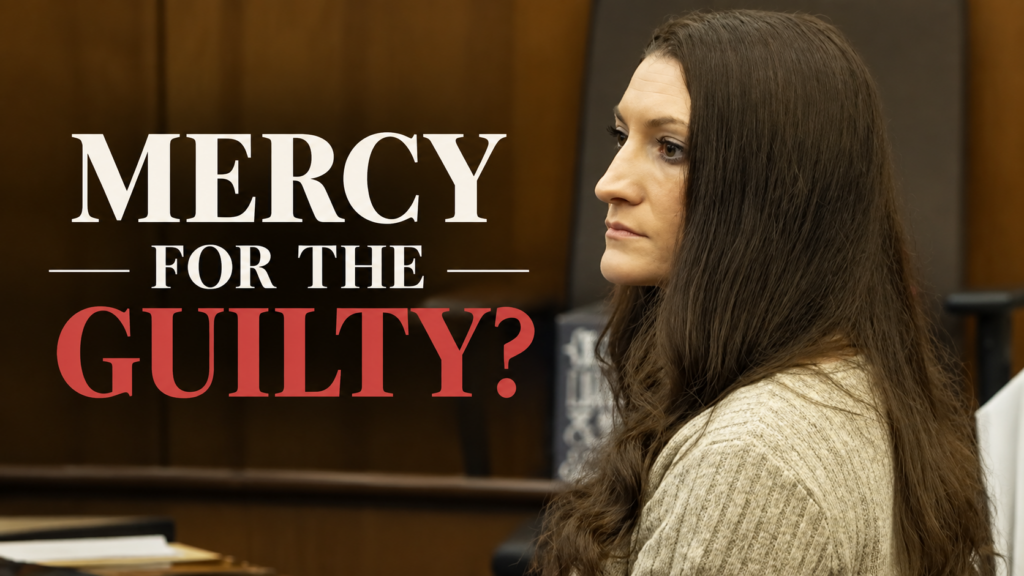
The plaintiff, Kaley Chiles, a licensed Christian counselor, brought suit against the state, alleging that the statute threatens her ability to practice her faith and profession. Chiles’ attorneys argue that the Colorado law violates her right to free speech. As ADF Chief Legal Counsel James A. Campbell said in his opening statement: “The First Amendment doesn’t permit Colorado’s censorship.”
During oral arguments, several justices expressed sympathy with the petitioner’s position—signaling that the Court may strike down the law. If a majority rules accordingly, similar statutes in 23 states and the District of Columbia could be invalidated.
Though Kentucky has not passed any such statute, Governor Andy Beshear sought to impose such censorship via Executive Order in September of 2024. Earlier that year, Democratic State Senator Karen Berg also introduced similar legislation, as did Republican State Representative Kim Banta in 2021.
The Court’s apparent position—as seen in the oral argument—is that such executive and legislative action is unconstitutional and infringes upon the First Amendment rights of Kentuckians. This is consistent with the Constitution and the Court’s jurisprudence upholding freedom of speech.
Kaley Chiles is a licensed counselor who helps her clients—sometimes under the age of 18—to deal with same-sex attraction or gender dysphoria. Chiles’ own Christian beliefs are part of her appeal to clients who are seeking religiously informed counseling. However, the Colorado statute would stamp out this practice and force her to acquiesce to a minor’s self-perceived gender identity, regardless of biological reality. Nor does the law consider the client’s own desires and goals for the counseling.
Because Colorado has yet to prosecute based on this statute, Justice Sotomayor questioned whether Chiles had standing to sue. However, given that Colorado has not ruled out the possibility of prosecution and the fact that “there have been anonymous complaints filed against [Chiles]… and those complaints are now being investigated by the State of Colorado…” it is clear that the law jeopardizes her counseling practice.
Other justices expressed skepticism at whether Chiles’ counseling really fell under the Free Speech Clause of the First Amendment, suggesting instead that Chiles’ talk therapy is a form of medical treatment subject to regulation in the State of Colorado.
Some on the court questioned whether Chiles’ counseling is subject to regulation in light of Section 240 of Colorado law, which regulates the practice of medicine. However, Chief Counsel Campbell rightly points out that because Chiles is simply a counselor and not a psychiatrist, her practice falls under Section 245 which pertains only to counseling and talk therapy.
In other words, Chiles is not practicing medicine, she’s practicing speech. Even Justice Elena Kagan—generally numbered among the more “liberal” justices—suggested that the state of Colorado is engaging in classic viewpoint discrimination, not the regulation of medicine.
This would not be the first time the Court has ruled to protect private conversations between counselors and clients. In 2018, the Court ruled similarly in National Institute of Family and Life Advocates v. Becerra—which involved a California law that forced pro-life pregnancy centers to post notices informing clients of the availability of abortions and giving out contact information for such clinics. Justice Thomas wrote for the majority that “By compelling individuals to speak a particular message, such notices ‘alte[r] the content of [their]
speech.’”
Similar reasoning is likely to be applied in Chiles—and rightly so. By compelling counselors to affirm an underaged client’s conception of their gender—regardless of biological reality—Colorado is altering the content of their speech. Such an abridgement of Chiles’ First Amendment rights as a counselor is even more egregious when one considers just how medically controversial so-called gender-affirming care has become.
By requiring counselors to affirm a child’s conception of their gender, regardless of religious conviction and biological reality, Colorado is hurting countless young lives. As the Ethics and Public Policy Center argues in its Amicius Brief, “Gender affirmation, in short, contravenes common sense, basic biology, and medical ethics.” It is for this reason that many European nations—including the United Kingdom, Sweden, Finland, and Norway—are reexamining and even reversing access to so-called gender-affirming care for minors.
Allowing for such treatment has produced tragic results. Long-term studies have shown that within 10 to 15 years after so-called sex-reassignment procedures, individuals who underwent such procedures had suicide rates that were significantly higher than their peers.
By enacting this ban on so-called “conversion therapy” Colorado is not only infringing upon the rights of counselors, but also actively harming minors—and the Court would be right to intervene.



0 Comments